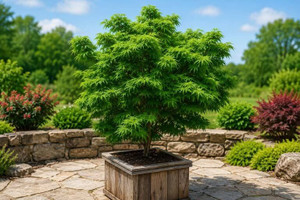
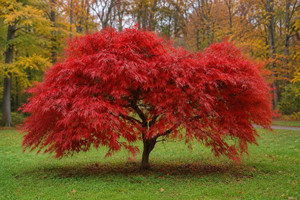
Bring graceful elegance and vibrant color to your landscape with the Dwarf Red Linear Leaf Japanese Maple. This stunning ornamental tree is prized for its finely divided, ribbon-like foliage that emerges deep red in spring, holds rich burgundy tones through summer, and finishes with brilliant crimson shades in autumn. Its naturally compact size makes it an outstanding choice for small gardens, patios, courtyards, containers, bonsai, and Japanese-style landscapes.
Botanical Information
- Botanical Name – Acer palmatum var. scolopendrifolium
- Common Name – Dwarf Red Linear Leaf Japanese Maple
- Family – Sapindaceae
- Plant Type – Deciduous Ornamental Tree
- Life Cycle – Perennial
- Native Range – Japan
- Mature Height – 8–15 feet
- Mature Spread – 6–12 feet
- Growth Rate – Slow
- USDA Hardiness Zones – 5–8
- Sun Exposure – Morning sun to partial shade
- Soil Preference – Moist, well-drained, organically rich soil
- Soil pH – Slightly acidic to neutral (5.5–7.0)
- Water Needs – Moderate
- Drought Tolerance – Low to Moderate once established
- Salt Tolerance – Low
- Deer Resistance – Moderate
- Wildlife Value – Provides seasonal shelter and habitat for birds
- Container Friendly – Excellent
- Landscape Uses – Specimen tree, Japanese gardens, patios, bonsai, woodland gardens, foundation plantings
- Germination Rate – Moderate with proper stratification
- Pre-treatment Required – Yes, 90 days cold stratification
Germination Instructions
- Place the seeds in a heat-proof container and pour hot water over them. The water temperature should not exceed 110°F (43°C). Allow the seeds to cool in the water and soak for 24 to 48 hours.
- Drain the water and place the seeds in a plastic bag filled with moist peat moss or vermiculite. Poke a few small holes in the bag for air circulation.
- Refrigerate the bag for approximately 90 days. This cold stratification breaks seed dormancy. Some seeds may begin producing small roots during this period.
- Fill 4-inch pots with a quality potting mix. Sow the seeds on the soil surface and cover with about 3/8 inch of soil.
- Water thoroughly until the soil is evenly moist. Allow the soil surface to dry slightly between waterings to help prevent rot.
- Place the pots in a bright location with indirect light. Seedlings typically emerge within 1–2 weeks after planting. Use a humidity dome to help maintain moisture during germination. Once seedlings emerge, provide light shade to protect young leaves from scorching.
Growing Information
- Prefers consistently moist, well-drained soil.
- Protect young plants from harsh afternoon sun.
- Mulch around the base to conserve moisture and regulate soil temperature.
- Avoid heavy pruning; remove only damaged or crossing branches.
- Makes an excellent container specimen for patios and decks.
- Slow-growing tree that develops exceptional ornamental form with age.
Seed Quantities Available