
Posted by TJ Hopkins on Apr 26th 2026
Guide to Pruning Fruit Trees
Pruning fruit trees is one of the most important tasks for maintaining healthy growth, improving fruit quality, and extending the life of your trees. With the right timing and techniques, pruning encourages better air circulation, stronger structure, and higher yields season after season.
When to Prune Fruit Trees
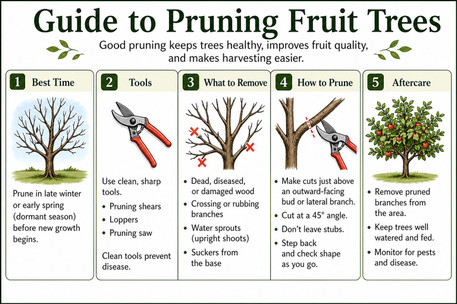
The best time to prune most fruit trees is during late winter or early spring while the tree is still dormant. Pruning during dormancy reduces stress on the tree and allows you to clearly see the branch structure before new growth begins. Avoid pruning in late fall, as this can stimulate new growth that may be damaged by cold weather.
Essential Tools for Pruning
Using the proper tools ensures clean cuts and helps prevent disease. Always use sharp, sanitized equipment before starting your work.
- Pruning shears for small branches
- Loppers for medium-sized limbs
- Pruning saw for thicker branches
Clean tools between cuts, especially if you suspect disease, to avoid spreading infections between trees.
What to Remove
Knowing what to cut is key to effective pruning. Focus on removing:
- Dead, diseased, or damaged branches
- Crossing or rubbing limbs that can cause wounds
- Water sprouts (fast-growing upright shoots)
- Suckers growing from the base of the tree
Clearing out these problem areas helps redirect the tree’s energy toward healthy growth and fruit production.
How to Prune Properly
Make each cut with purpose to shape the tree and promote strong structure. Cut just above an outward-facing bud or lateral branch to encourage growth away from the center. Use a slight angle (about 45 degrees) to prevent water from collecting on the cut surface. Avoid leaving stubs, as they can invite disease and decay. Step back occasionally to assess the overall shape and balance of the tree as you work.
Aftercare Tips
Once pruning is complete, remove all cut branches from around the tree to reduce the risk of pests and disease. Water the tree if conditions are dry and consider applying a balanced fertilizer in early spring. Keep an eye on your tree throughout the growing season for any signs of stress, pests, or disease.
Final Thoughts
Regular pruning keeps fruit trees productive, manageable, and healthy. By following proper timing, using the right tools, and making thoughtful cuts, you can enjoy stronger trees and better harvests year after year.