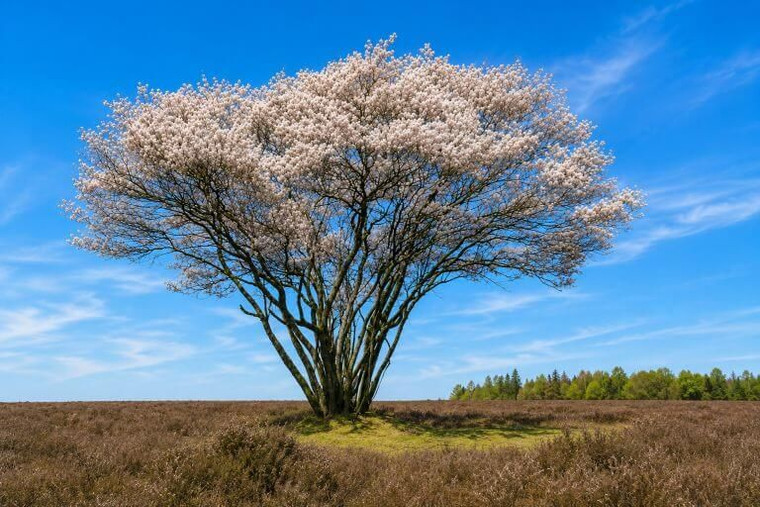
Grow the beautiful and highly ornamental Juneberry Tree (Amelanchier lamarckii), also known as Snowy Mespilus or Serviceberry. This small deciduous tree is prized for its stunning display of fragrant white flowers in early spring, edible sweet purple berries in early summer, brilliant orange-red fall foliage, and attractive smooth gray bark. The berries are a favorite of birds and can also be enjoyed fresh or used in pies, jams, and preserves. Juneberry is an excellent choice for wildlife gardens, naturalized landscapes, woodland borders, and ornamental plantings.
Botanical Information
- Botanical Name: Amelanchier lamarckii
- Common Name: Juneberry Tree, Snowy Mespilus, Serviceberry
- Plant Type: Deciduous Flowering Tree / Large Shrub
- Germination Rate: 50–70%
- Native Range: Europe (widely cultivated and naturalized)
- Mature Height: 15–25 feet
- Mature Spread: 15–20 feet
- Growth Rate: Moderate
- USDA Hardiness Zones: 4–8
- Sun Requirements: Full Sun to Partial Shade
- Soil Preference: Moist, fertile, well-drained soil; tolerates sandy, loamy, and clay soils
- Bloom Time: Early Spring
- Flower Color: White
- Fruit: Sweet purple-black edible berries
- Wildlife Value: Excellent food source for birds, bees, butterflies, and other pollinators
Germination Instructions
Juneberry seeds require both warm and cold stratification to overcome natural dormancy.
- Mix seeds with a slightly moist growing medium such as peat moss or vermiculite.
- Place the seeds in a sealed plastic bag or container.
- Warm stratify for 30–60 days at approximately 68–75°F (20–24°C).
- Immediately follow with 90–120+ days of cold moist stratification at 34–41°F (1–5°C).
- Sow seeds approximately 1/8 inch deep in a well-draining seed-starting mix.
- Keep the soil consistently moist but not waterlogged and place under a humidity dome until germination begins.
- Germination may occur over several weeks and can be somewhat irregular as natural dormancy is broken.
Growing Information
- Prefers full sun for maximum flowering and fruit production but grows well in partial shade.
- Performs best in evenly moist, well-drained soils with moderate fertility.
- Tolerates a wide range of soil types, including slightly acidic to neutral soils.
- Produces spectacular white spring blossoms before the leaves fully emerge.
- Develops edible berries that attract numerous species of birds and wildlife.
- Displays outstanding orange, red, and gold foliage during autumn.
- Requires little maintenance once established.
- Excellent for specimen planting, hedgerows, woodland gardens, native landscapes, and wildlife habitats.
- Fairly resistant to pests and diseases when planted in suitable growing conditions.
Seed Quantities Available