

Korean Mountain Ash Tree Seeds
$75.00
Write a Review
Korean Mountain Ash Tree Seeds
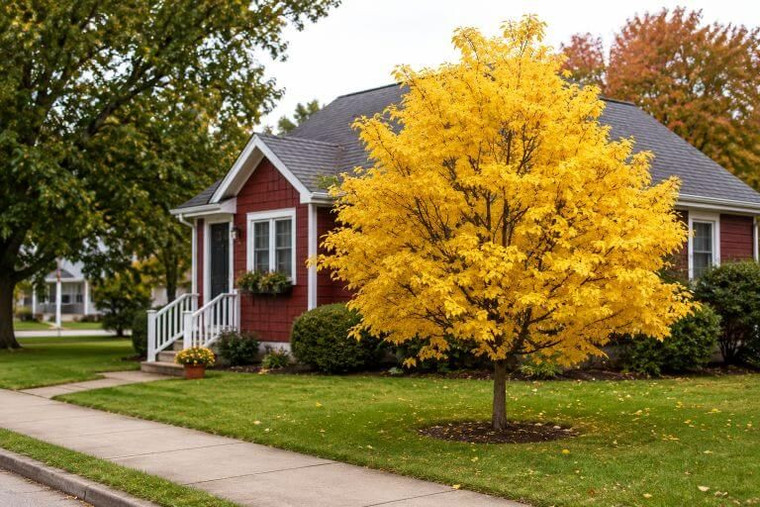
Korean Mountain Ash is an attractive deciduous tree valued for its rounded canopy, clusters of white spring flowers, colorful berries, and brilliant yellow, orange, and red fall foliage. Native to eastern Asia, this hardy tree makes an excellent ornamental specimen for lawns, parks, woodland gardens, and larger landscapes. The berries provide an important food source for birds and other wildlife.
Botanical Information
- Botanical Name: Sorbus alnifolia
- Common Name: Korean Mountain Ash
- Family: Rosaceae
- Plant Type: Deciduous ornamental tree
- Life Cycle: Perennial
- Native Range: Korea, Japan, China, and eastern Asia
- Mature Height: 30–50 feet
- Mature Spread: 20–35 feet
- Growth Rate: Moderate
- USDA Zones: 4–7
- Sun: Full sun to partial shade
- Soil Preference: Moist, fertile, well-drained soil
- Soil pH: Slightly acidic to neutral
- Water Needs: Moderate
- Drought Tolerance: Moderate once established
- Salt Tolerance: Low to moderate
- Deer Resistance: Moderate
- Wildlife Value: Flowers attract pollinators, and berries provide food for birds
- Container Friendliness: Suitable for containers when young
- Landscape Uses: Specimen tree, shade tree, woodland garden, wildlife garden, parks, and large landscapes
- Germination Rate: 50–70%
- Pre-treatment: 90 days of cold, moist stratification
Germination Instructions
Place the seeds in a small amount of moist seed-starting mix, peat moss, or fine sand. The medium should be damp but not soaking wet. Seal the mixture inside a labeled plastic bag or covered container and refrigerate at approximately 34–41°F for 90 days.
Check the seeds periodically and keep the stratification medium slightly moist. After the cold stratification period, sow the seeds approximately 1/4 inch deep in containers filled with a moist, well-draining seed-starting mix.
Place the containers in a bright location with temperatures between 65–75°F. Cover the containers with a clear humidity dome to help maintain consistent moisture. Keep the soil evenly moist but avoid overwatering. Germination may occur gradually, so allow adequate time for seedlings to emerge.
Growing Information
- Plant seedlings in full sun to partial shade
- Select a location with fertile, moist, well-drained soil
- Water regularly during the first growing seasons
- Avoid locations with consistently waterlogged soil
- Apply mulch around the root zone to conserve moisture and regulate soil temperature
- Keep mulch several inches away from the trunk
- Protect young seedlings from extreme heat and drying winds
- Transplant outdoors after seedlings are established and the danger of severe frost has passed
- Space trees approximately 20–30 feet apart
- Prune damaged, crossing, or poorly positioned branches during dormancy
Seed Quantities Available
- 1 oz. – Approximately 9,375 Seeds
- 1/4 lb. – Approximately 37,500 Seeds
- 1 lb. – Approximately 150,000 Seeds
Related Products
-

-
Korean Pine Tree Seeds
$40.00 - $130.00 -
Flowering Ash Tree Seeds
$30.00 - $75.00 -
Green Ash Tree Seeds
$30.00 - $75.00