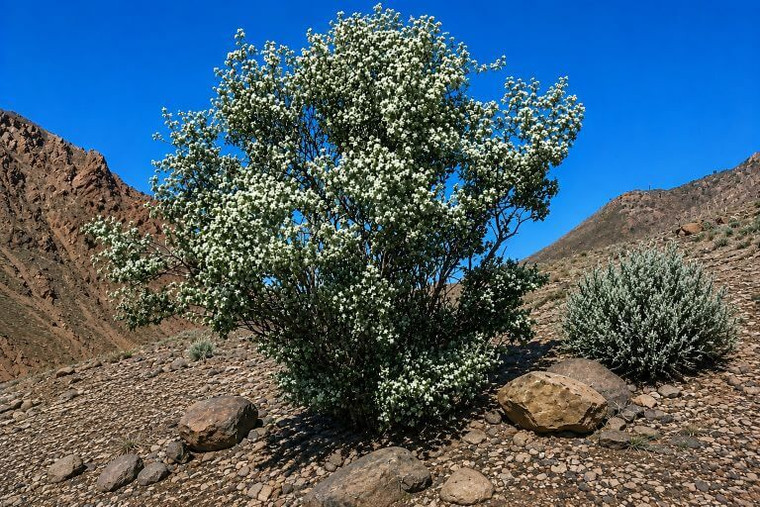
Utah Serviceberry (Amelanchier utahensis) is a hardy, drought-tolerant native shrub or small tree prized for its beautiful white spring blossoms, attractive blue-green foliage, edible purple berries, and outstanding fall color. Native to the western United States, this adaptable species thrives in a variety of landscapes and provides excellent food and shelter for birds, pollinators, and other wildlife. Utah Serviceberry is an outstanding choice for xeriscapes, native gardens, windbreaks, wildlife habitat, and naturalized plantings.
Botanical Information
- Botanical Name: Amelanchier utahensis
- Common Name: Utah Serviceberry
- Plant Type: Deciduous shrub or small tree
- Germination Rate: 70–90%
- Native Range: Western United States
- USDA Hardiness Zones: 4–8
- Mature Height: 6–15 feet
- Mature Spread: 6–12 feet
- Growth Rate: Moderate
- Light Requirements: Full sun to partial shade
- Soil Preference: Well-drained sandy, loamy, or rocky soils
- Soil pH: Slightly acidic to neutral (6.0–7.5)
- Moisture Requirements: Low to moderate once established
- Bloom Time: Early to mid-spring
- Flower Color: White
- Fruit: Edible purple-blue berries that attract birds and wildlife
Germination Instructions
Utah Serviceberry seeds require a period of cold moist stratification to overcome dormancy.
- Place seeds in a moist mixture of peat moss, vermiculite, or sand.
- Refrigerate at 34–41°F (1–5°C) for 90–120 days.
- After stratification, sow seeds approximately 1/8 inch deep in a quality seed-starting mix.
- Keep the growing medium evenly moist but not waterlogged.
- Place containers in a warm, bright location until germination occurs.
- Transplant seedlings outdoors after they have developed several sets of true leaves and all danger of frost has passed.
Growing Information
- Performs best in full sun for maximum flowering and fruit production.
- Adapts well to dry, rocky, and poor soils once established.
- Excellent drought tolerance after establishment.
- Produces fragrant white flowers that are highly attractive to bees and other pollinators.
- Edible berries can be enjoyed fresh or used in jams, pies, syrups, and preserves.
- Brilliant yellow to orange-red fall foliage adds outstanding seasonal interest.
- Makes an excellent specimen plant, hedge, wildlife planting, or erosion control shrub.
- Requires minimal maintenance once established.
Seed Quantities Available
- 1 oz. - 2,812 Seeds
- 1/4 lb. - 11,248 Seeds
- 1 lb. - 44,992 Seeds