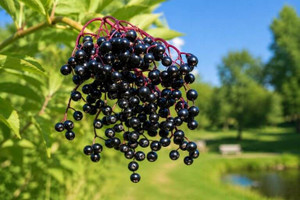
American Elderberry Tree Seeds (Sambucus canadensis) produce a fast-growing native shrub or small multi-stemmed tree valued for its fragrant white flower clusters, dark purple-black berries, and outstanding wildlife benefits. American Elderberry is an excellent choice for edible landscapes, native gardens, rain gardens, naturalized areas, hedgerows, and erosion control. The flowers attract bees and beneficial pollinators, while the berries provide food for songbirds and other wildlife. Plants grow best in full sun to partial shade and prefer moist, fertile, well-drained soil.
Botanical Information
- Botanical Name: Sambucus canadensis
- Common Name: American Elderberry
- Family: Adoxaceae
- Plant Type: Deciduous flowering shrub or small multi-stemmed tree
- Life Cycle: Perennial
- Native Range: Eastern and central North America
- Mature Height: 5–12 feet
- Mature Spread: 5–12 feet
- Growth Rate: Fast
- USDA Zones: 3–9
- Sun: Full sun to partial shade
- Soil Preference: Moist, fertile, well-drained soil
- Soil pH: Slightly acidic to neutral, approximately 5.5–7.5
- Water Needs: Moderate to high
- Drought Tolerance: Low to moderate once established
- Salt Tolerance: Low
- Deer Resistance: Moderate
- Wildlife Value: Excellent; flowers attract pollinators, and berries provide food for birds and wildlife
- Container Friendliness: Moderate; suitable for large containers when young
- Landscape Uses: Edible landscapes, native gardens, wildlife gardens, rain gardens, hedgerows, naturalized areas, erosion control, and woodland borders
- Germination Rate: 70–90%
- Pre-treatment: 30–60 days warm moist stratification followed by 90–120 days cold moist stratification
Germination Instructions
American Elderberry seeds have natural dormancy and require both warm and cold moist stratification before germination.
Mix the seeds with slightly moist sterile seed-starting mix, peat moss, or fine sand. Place the mixture inside a labeled resealable plastic bag or covered container.
Keep the seeds at approximately 65–75°F for 30–60 days. Check periodically to maintain light moisture and provide occasional air circulation.
After warm stratification, place the seeds in a refrigerator at approximately 34–41°F for 90–120 days. The medium should remain slightly moist but never wet or waterlogged.
After cold stratification, sow seeds approximately 1/8–1/4 inch deep in containers filled with a quality seed-starting mix. Lightly water and cover with a humidity dome to maintain consistent moisture.
Place the containers in a bright location with temperatures around 65–75°F. Keep the growing medium evenly moist. Germination may be gradual and can occur over an extended period.
Growing Information
- Transplant seedlings after they develop several sets of true leaves and are large enough to handle safely.
- Plant outdoors after the danger of severe frost has passed.
- Space plants approximately 6–10 feet apart, depending on the desired landscape use.
- Choose a location with full sun for the best flowering and fruit production.
- Partial shade is tolerated, although plants may produce fewer flowers and berries.
- Keep the soil consistently moist during the first growing season.
- Apply mulch around the plants to conserve moisture and reduce weed growth.
- American Elderberry naturally develops multiple stems and may spread by root suckers.
- Prune damaged, weak, or older stems during dormancy to encourage vigorous new growth.
- Planting more than one genetically different elderberry plant may improve fruit production.
- Flowers and properly prepared ripe berries are commonly used in culinary products; other plant parts and unripe berries should not be consumed.
Seed Quantities Available
- 1 oz. – Approximately 15,625 Seeds
- 1/4 lb. – Approximately 62,500 Seeds
- 1 lb. – Approximately 250,000 Seeds