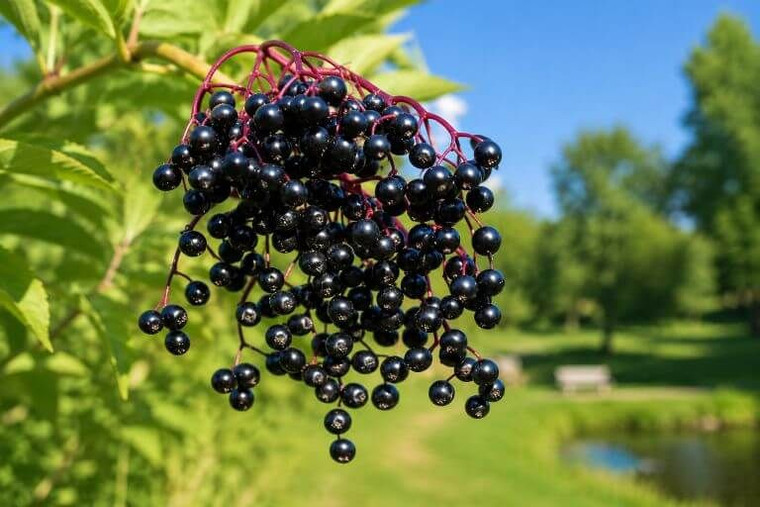
Black Elderberry Tree Seeds (Sambucus nigra) produce vigorous deciduous shrubs or small trees valued for their fragrant white flower clusters, dark purple-black berries, wildlife benefits, and ornamental appeal. Native to Europe and parts of western Asia and North Africa, Black Elderberry is commonly grown in edible landscapes, wildlife gardens, hedgerows, and naturalized areas. The berries are widely used in syrups, jams, jellies, wines, and other cooked products. Raw or unripe berries and other plant parts should not be consumed.
Botanical Information
- Botanical Name: Sambucus nigra
- Common Name: Black Elderberry, European Elderberry
- Family: Adoxaceae
- Plant Type: Deciduous shrub or small tree
- Life Cycle: Perennial
- Native Range: Europe, western Asia, and northern Africa
- Mature Height: 10–20 feet
- Mature Spread: 10–15 feet
- Growth Rate: Fast
- USDA Zones: 4–8
- Sun: Full sun to partial shade
- Soil Preference: Moist, fertile, well-drained soil
- Soil pH: Slightly acidic to neutral
- Water Needs: Moderate to high
- Drought Tolerance: Low to moderate once established
- Salt Tolerance: Low
- Deer Resistance: Moderate
- Wildlife Value: Flowers attract pollinators; berries provide food for birds and other wildlife
- Container Friendliness: Suitable for large containers when young
- Landscape Uses: Wildlife gardens, edible landscapes, hedgerows, screens, naturalized areas, and rain gardens
- Germination Rate: 50–70%
- Pre-treatment: 30 days of warm moist stratification followed by 120–160 days of cold moist stratification
Germination Instructions
Mix the seeds with slightly damp sterile seed-starting mix, peat moss, or sand. Place the mixture inside a sealed plastic bag or covered container.
Keep the seeds at approximately 65–75°F for 30 days to complete the warm moist stratification period. Check occasionally to ensure the medium remains slightly moist but not wet.
After warm stratification, place the sealed seeds in a refrigerator at approximately 34–41°F for 120–160 days. Do not allow the seeds to dry out during stratification.
After cold stratification, sow the seeds approximately 1/4 inch deep in moist, well-draining seed-starting mix. Place the containers in a warm location with bright indirect light. Cover with a clear humidity dome to maintain consistent moisture.
Keep the growing medium evenly moist but not waterlogged. Germination may occur gradually and can be irregular. Some seeds may require additional seasonal temperature cycles before sprouting.
Growing Information
- Transplant seedlings after they have developed several sets of true leaves
- Choose a location with full sun to partial shade
- Full sun generally encourages stronger flowering and fruit production
- Plant in moist, fertile, well-drained soil
- Water regularly during the first growing season
- Maintain consistent soil moisture during hot or dry weather
- Space plants approximately 8–12 feet apart
- Apply mulch around the root zone to conserve moisture and reduce weeds
- Avoid placing mulch directly against the trunk or stems
- Prune during dormancy to remove damaged, weak, or overcrowded growth
- Mature plants may produce fragrant white flowers followed by clusters of dark purple-black berries
- Planting more than one compatible elderberry variety may improve fruit production
- Cook ripe berries before consumption and avoid consuming raw or unripe berries, leaves, stems, or other plant parts
Seed Quantities Available
- 1 oz. – Approximately 7,437 Seeds
- 1/4 lb. – Approximately 29,748 Seeds
- 1 lb. – Approximately 118,992 Seeds