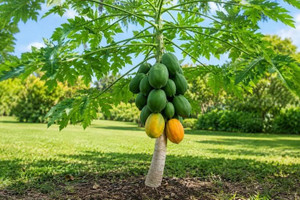
Dwarf Hawaiian Solo Sunrise Strawberry Papaya Seeds are an excellent choice for growing compact, productive papaya plants with sweet, aromatic, reddish-orange fruit. Also known as Strawberry Papaya, this tropical variety produces smooth, flavorful fruit with a rich sweetness that is ideal for fresh eating, smoothies, fruit salads, and desserts.
Although naturally suited to warm tropical and subtropical climates, Dwarf Hawaiian Solo Sunrise Papaya can also be grown in large containers in cooler regions and moved indoors during cold weather. Papaya plants grow quickly under warm conditions and perform best with full sun, fertile soil, consistent moisture, and excellent drainage.
Botanical Information
- Botanical Name: Carica papaya
- Common Name: Dwarf Hawaiian Solo Sunrise Strawberry Papaya
- Family: Caricaceae
- Plant Type: Tropical fruit plant
- Life Cycle: Short-lived perennial
- Native Range: Tropical Americas; this cultivated variety was developed in Hawaii
- Mature Height: Approximately 6–10 feet
- Mature Spread: Approximately 4–6 feet
- Growth Rate: Fast
- USDA Zones: 9–11
- Sun: Full sun
- Soil Preference: Fertile, loose, well-draining soil
- Soil pH: 5.5–7.0
- Water Needs: Moderate; keep evenly moist but never waterlogged
- Drought Tolerance: Low to moderate once established
- Salt Tolerance: Moderate
- Deer Resistance: Low
- Wildlife Value: Ripe fruit may attract birds and other wildlife
- Container Friendliness: Good when grown in a large container
- Landscape Uses: Tropical gardens, edible landscapes, patios, greenhouses, and container gardens
- Germination Rate: Germination may improve when the recommended calcium nitrate and warm-water treatments are used
- Pre-treatment: Calcium nitrate soak followed by a brief hot-water treatment and a 24-hour distilled-water soak
Germination Instructions
- Mix approximately 3½ ounces of calcium nitrate into 1 quart of water. Calcium nitrate is commonly available at garden centers as a fertilizer. Soak the papaya seeds in this solution for approximately 30 minutes. This treatment may help shorten germination time and increase the percentage of seeds that successfully germinate.
- After the calcium nitrate treatment, soak the seeds in water heated to 158°F for 15 seconds. Immediately transfer the seeds to distilled water at room temperature and soak for 24 hours.
- Fill individual 1-gallon containers with a loose, well-mixed, and well-draining seed-starting medium. Avoid starting papaya seeds in small seedling trays because papayas can be sensitive to root disturbance and may transplant poorly. Starting them in larger containers reduces the number of times they need to be transplanted.
- Use a heated propagator mat to maintain a soil temperature between 80–85°F. Place the containers in a bright, sunny location or provide strong supplemental lighting with a grow light.
- Evenly space two to four seeds in each container. Cover the seeds with approximately ¼–½ inch of seed-starting mix.
- Water gently and keep the soil consistently moist but never saturated. Avoid allowing the growing medium to become waterlogged, as excess moisture may encourage seed rot.
- Under warm conditions and after the recommended pre-treatment, germination may occur in approximately 2–5 weeks. Continue providing warmth and consistent moisture because individual seeds may germinate at different times.
Growing Information
- Light: Provide full sun or strong supplemental grow lighting
- Temperature: Papayas prefer consistently warm temperatures and are sensitive to frost
- Watering: Keep soil evenly moist while allowing excess water to drain freely
- Soil: Use fertile, loose soil with excellent drainage
- Fertilizing: Feed regularly during active growth with a balanced fertilizer formulated for fruiting plants
- Container Growing: Use a large container with ample drainage holes
- Transplanting: Minimize root disturbance and transplant carefully
- Spacing: Space outdoor plants approximately 6–10 feet apart
- Cold Protection: Protect plants when temperatures approach 40°F
- Fruiting: Warm temperatures, full sun, adequate nutrition, and consistent moisture support healthy flowering and fruit production
- Harvest: Harvest fruit when the skin begins changing from green to yellow-orange and the fruit yields slightly to gentle pressure
Seed Quantities Available