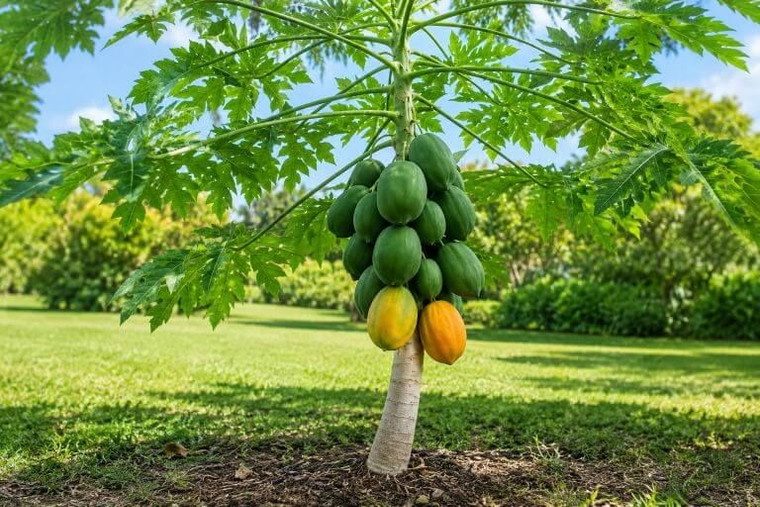
Dwarf Waimanalo Papaya Seeds produce vigorous tropical fruit plants known for their compact growth, sweet orange-yellow flesh, and delicious tropical flavor. Carica papaya ‘Waimanalo’ is a productive dwarf papaya variety well suited for warm climates, greenhouses, patios, and large containers. Its shorter stature makes fruit easier to harvest than many taller papaya varieties.
Waimanalo papayas develop attractive, deeply lobed leaves and grow rapidly under warm, sunny conditions. The flavorful fruit is excellent for fresh eating, fruit salads, smoothies, desserts, and tropical recipes.
Botanical Information
- Botanical Name: Carica papaya ‘Waimanalo’
- Common Name: Dwarf Waimanalo Papaya
- Family: Caricaceae
- Plant Type: Tropical fruiting plant
- Life Cycle: Short-lived perennial
- Native Range: Cultivated Hawaiian papaya variety
- Mature Height: Approximately 6–10 feet under favorable growing conditions
- Mature Spread: Approximately 4–6 feet
- Growth Rate: Fast
- USDA Zones: 10–11 outdoors; can be grown in containers or protected environments in colder climates
- Sun: Full sun
- Soil Preference: Rich, fertile, loose, well-draining soil
- Soil pH: Approximately 5.5–7.0
- Water Needs: Moderate; keep evenly moist without allowing the soil to become waterlogged
- Drought Tolerance: Low to moderate once established
- Salt Tolerance: Moderate
- Deer Resistance: Low
- Wildlife Value: Flowers may attract pollinators; ripe fruit may attract birds and other wildlife
- Container Friendliness: Good when grown in a large container
- Landscape Uses: Tropical gardens, edible landscapes, patios, greenhouses, orchards, and large containers
- Germination Rate: Germination may vary depending on seed preparation, temperature, moisture, and growing conditions
- Pre-treatment: Calcium nitrate treatment, brief hot-water treatment, and a 24-hour distilled-water soak are recommended
Germination Instructions
- Mix approximately 3½ ounces of calcium nitrate with 1 quart of water. Calcium nitrate is commonly available at garden centers as a fertilizer. This treatment may help reduce germination time and increase the percentage of seeds that successfully germinate. Soak the papaya seeds in the calcium nitrate solution for approximately 30 minutes.
- Place the seeds in water heated to 158°F for 15 seconds. Immediately remove the seeds, then soak them in distilled water at room temperature for 24 hours. Do not leave the seeds in the hot water longer than recommended.
- Use a thoroughly mixed, fertile, and well-draining seed-starting soil. Avoid starting papaya seeds in small seedling trays because papayas can be sensitive to root disturbance and may transplant poorly. Starting the seeds in 1-gallon containers can reduce the number of times the plants need to be transplanted.
- Use a heated propagator mat to maintain a soil temperature between 80–85°F. Place the containers in a warm, sunny location or provide bright light with a grow light.
- Evenly space two to four seeds in each container. Cover the seeds with approximately ¼–½ inch of potting mix.
- Keep the soil consistently moist but never saturated or waterlogged. Allow excess water to drain freely to help reduce the risk of seed and root rot.
- Under favorable conditions, papaya seeds may begin germinating in approximately 2–5 weeks when the calcium nitrate treatment is used. Germination time can vary, so continue providing steady warmth, moisture, and bright light for seeds that take longer to sprout.
Growing Information
- Provide full sun or strong supplemental grow lighting.
- Maintain warm temperatures and protect plants from frost and prolonged cool conditions.
- Grow in fertile, well-draining soil and avoid locations where water collects around the roots.
- Water regularly to maintain even soil moisture, but do not keep the soil soggy.
- Feed established plants with a balanced fertilizer suitable for tropical fruit plants.
- Papayas are sensitive to root disturbance, so handle young plants carefully when transplanting.
- Select the strongest seedling in each container and carefully remove weaker seedlings after growth is established.
- Use large containers with adequate drainage when growing papayas on patios or in greenhouses.
- Container-grown plants may require more frequent watering and fertilizing during active growth.
- Protect outdoor plants from strong winds that may damage their large leaves or shallow root systems.
Seed Quantities Available
- 20 Seeds
- 40 Seeds
- 100 Seeds