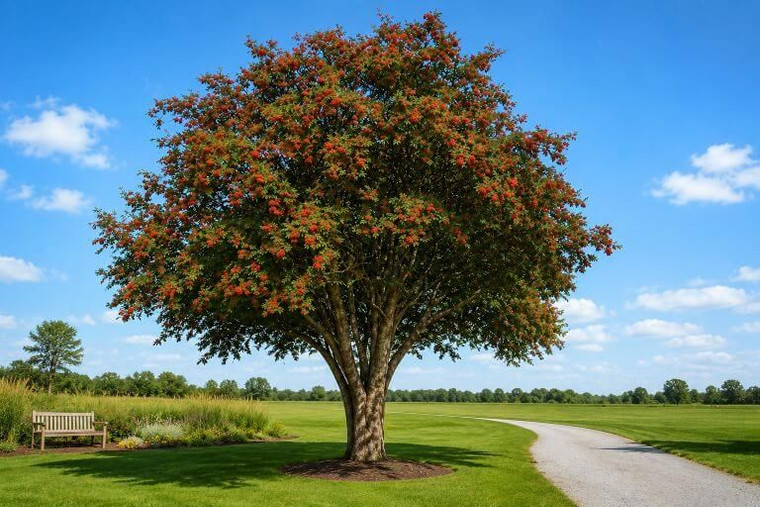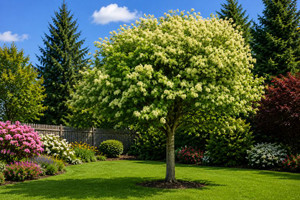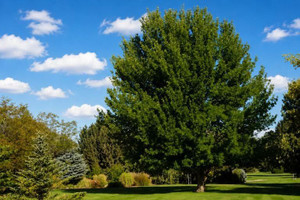
European Mountain Ash Tree Seeds (Sorbus aucuparia) produce an attractive deciduous tree known for its clusters of creamy-white spring flowers, bright orange-red berries, and colorful fall foliage. Also called Rowan Tree, this hardy ornamental tree provides valuable food for birds and adds year-round interest to landscapes, woodland gardens, and naturalized areas.
Botanical Information
- Botanical Name: Sorbus aucuparia
- Common Name: European Mountain Ash, Rowan Tree
- Family: Rosaceae
- Plant Type: Deciduous flowering tree
- Life Cycle: Perennial
- Native Range: Europe and parts of western Asia
- Mature Height: 20–40 feet
- Mature Spread: 15–25 feet
- Growth Rate: Moderate
- USDA Zones: 3–6
- Sun: Full sun to partial shade
- Soil Preference: Moist, well-drained, fertile soil
- Soil pH: Slightly acidic to neutral
- Water Needs: Moderate
- Drought Tolerance: Low to moderate once established
- Salt Tolerance: Low
- Deer Resistance: Moderate
- Wildlife Value: Berries provide an important food source for birds
- Container Friendliness: Suitable for containers when young
- Landscape Uses: Specimen tree, woodland garden, wildlife garden, naturalized planting, cottage garden, and ornamental landscape
- Germination Rate: 60–80%
- Pre-treatment: 30–60 days warm stratification followed by 90–120 days cold stratification
Germination Instructions
Place the seeds in a moist growing medium, such as peat moss, sand, or vermiculite. Keep them at approximately 65–75°F for 30–60 days to complete the warm stratification period.
After warm stratification, place the seeds in a refrigerator at approximately 34–41°F for 90–120 days. Keep the growing medium consistently moist but not waterlogged throughout both stratification periods.
Following cold stratification, sow the seeds approximately 1/4 inch deep in a quality seed-starting mix. Keep the soil evenly moist and place the containers in a bright location. Use a humidity dome to help maintain consistent moisture during germination.
Germination may be gradual and uneven. Some seeds may require additional seasonal temperature cycles before sprouting.
Growing Information
- Plant seedlings in full sun to partial shade
- Choose moist, fertile soil with good drainage
- Water regularly during the first several growing seasons
- Apply mulch around the root zone to retain moisture and regulate soil temperature
- Avoid planting in extremely hot, dry locations
- Provide adequate spacing for mature growth
- Produces clusters of white flowers during spring
- Develops colorful orange-red berries that attract birds
- Displays yellow, orange, or reddish foliage during fall
- Suitable for cool climates and naturalized landscapes
Seed Quantities Available
- 1 oz. – 7,812 Seeds
- 1/4 lb. – 31,248 Seeds
- 1 lb. – 124,992 Seeds