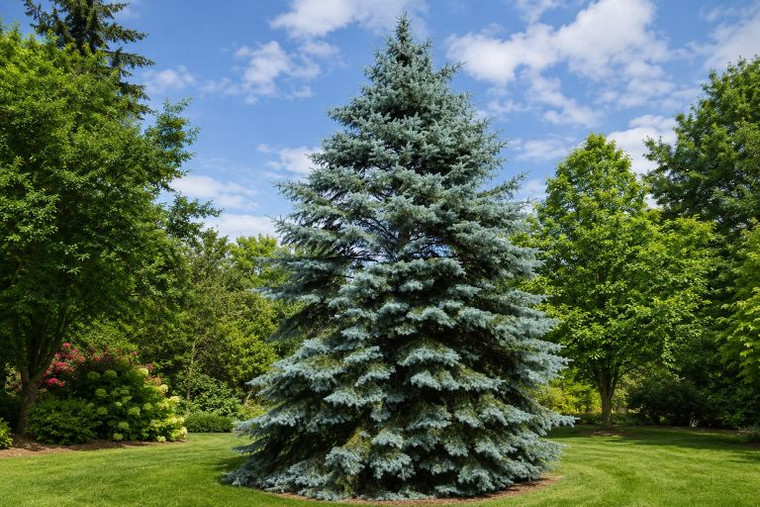
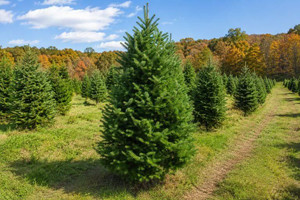
White Fir (Abies concolor), also known as Colorado White Fir, is a beautiful evergreen conifer prized for its soft blue-green to silvery-green needles, symmetrical pyramidal shape, and pleasant citrus fragrance when the foliage is crushed. Native to the mountains of the western United States, White Fir is an excellent choice for landscaping, windbreaks, reforestation projects, wildlife habitat, and Christmas tree production. Its attractive appearance, adaptability, and tolerance of drought once established make it one of the most desirable fir species for both home landscapes and large-scale plantings.
Botanical Information
- Botanical Name: Abies concolor
- Common Name: White Fir, Colorado White Fir
- Germination Rate: 50–70%
- Plant Type: Evergreen Conifer Tree
- Family: Pinaceae
- Mature Height: 40–80 feet (can exceed 100 feet in ideal conditions)
- Mature Spread: 20–40 feet
- Growth Rate: Moderate
- USDA Hardiness Zones: 3–7
- Sun Requirements: Full Sun to Partial Shade
- Soil Preference: Moist, well-drained sandy, loamy, or rocky soils
- Soil pH: Slightly acidic to neutral (5.5–7.0)
- Drought Tolerance: Moderate once established
- Wildlife Value: Provides nesting sites and shelter for birds and small mammals while offering seeds as a food source for wildlife.
Germination Instructions
White Fir seeds require 30–45 days of cold moist stratification before planting for the best germination results.
- Mix the seeds with a moist (not wet) growing medium such as peat moss or vermiculite.
- Seal the mixture in a plastic bag or airtight container.
- Refrigerate at 34–40°F for 30–45 days.
- After stratification, sow seeds approximately 1/4 inch deep in a quality seed-starting mix.
- Keep the soil consistently moist and use a humidity dome to help maintain moisture during germination.
- Place trays in a bright location with temperatures between 65–75°F until seedlings emerge.
Growing Information
- Excellent choice for ornamental landscapes, windbreaks, and privacy screens.
- Popular species for Christmas tree farms due to its attractive foliage and excellent needle retention.
- Performs best in well-drained soils with consistent moisture during establishment.
- Tolerates cold winters and mountain climates exceptionally well.
- Avoid planting in poorly drained or waterlogged soils.
- Requires little maintenance once established.
- Develops into a long-lived specimen tree with a naturally attractive shape.
Seed Quantities Available
- 1 oz. - 625 Seeds
- 1/4 lb. - 2,500 Seeds
- 1 lb. - 10,000 Seeds