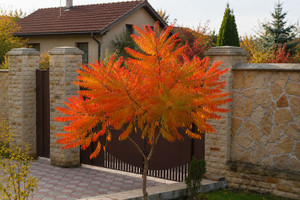
Staghorn Sumac Tree Seeds (Rhus typhina) grow into hardy, fast-growing native shrubs or small trees known for their distinctive fuzzy branches, large tropical-looking foliage, brilliant red-orange fall color, and upright clusters of deep red berries. This adaptable species is an excellent choice for naturalized landscapes, wildlife gardens, erosion control, windbreaks, slopes, and native plantings.
Staghorn Sumac spreads naturally through root suckers and may form attractive colonies over time. Its dense growth provides valuable shelter for birds and wildlife, while the persistent red fruit clusters offer an important food source during fall and winter. The seeds require scarification before sowing to help break the hard seed coat and encourage successful germination.
Botanical Information
- Botanical Name: Rhus typhina
- Common Name: Staghorn Sumac
- Family: Anacardiaceae
- Plant Type: Deciduous shrub or small tree
- Life Cycle: Perennial
- Native Range: Eastern and central North America
- Mature Height: 15–25 feet
- Mature Spread: 15–30 feet
- Growth Rate: Fast
- USDA Zones: 3–8
- Sun: Full sun to partial shade
- Soil Preference: Adaptable to sandy, rocky, loamy, dry, and well-drained soils
- Soil pH: Acidic to slightly alkaline
- Water Needs: Low to moderate
- Drought Tolerance: High once established
- Salt Tolerance: Moderate
- Deer Resistance: Moderate
- Wildlife Value: Provides fruit and shelter for birds and other wildlife
- Container Friendliness: Suitable for young plants but not recommended for long-term container growth
- Landscape Uses: Native gardens, wildlife habitats, erosion control, slopes, naturalized areas, windbreaks, screens, and fall-color plantings
- Germination Rate: 70–90%
- Pre-treatment: Scarification is required before sowing
Germination Instructions
Scarify the seeds before sowing to weaken the hard outer seed coat. Carefully nick or lightly sand a small area of each seed coat without damaging the inner seed. Seeds may also be treated with a brief hot-water scarification.
After scarification, soak the seeds in room-temperature water for approximately 12–24 hours. Sow the seeds about 1/8 to 1/4 inch deep in a moist, well-draining seed-starting mix.
Keep the growing medium consistently moist but not waterlogged. Cover the seed tray with a humidity dome to help maintain moisture and humidity. Place the tray in a warm location with bright, indirect light.
Germination may begin within several weeks, although some seeds may require additional time. Remove the humidity dome gradually after seedlings emerge and provide bright light with good air circulation.
Growing Information
- Plant in full sun for the strongest growth, best fall color, and heaviest fruit production
- Tolerates partial shade but may develop a more open growth habit
- Grows well in poor, rocky, sandy, dry, and disturbed soils
- Prefers well-drained soil and does not require highly fertile growing conditions
- Water young plants regularly until a strong root system becomes established
- Established plants have excellent drought tolerance
- Space individual plants approximately 10–20 feet apart
- May spread through underground root suckers and form colonies
- Remove unwanted suckers when a more controlled growth habit is desired
- Pruning is generally unnecessary but may be completed during dormancy to remove damaged or unwanted growth
- Produces brilliant shades of red, orange, and yellow during fall
- Female plants may produce upright clusters of fuzzy red fruit when pollinated
- Excellent for native landscapes, wildlife habitats, erosion control, and naturalized areas
Seed Quantities Available
- 1 oz. – Approximately 3,125 Seeds
- 1/4 lb. – Approximately 12,500 Seeds
- 1 lb. – Approximately 50,000 Seeds